
With Senator Gary Peters announcing his departure from the Senate in early 2025, Michigan’s political outlook is preparing for a significant transformation just months before the 2026 midterm elections. Peters’ exit leaves an open Senate seat that has quickly become a focus of attention for both parties, leading to a national background, intensifying the battle. As candidates gear up to fill this vacancy, this race in Michigan is shaping up to be one of the most closely watched elections of the midterms, creating rising national tensions and the momentous 2026 midterms.
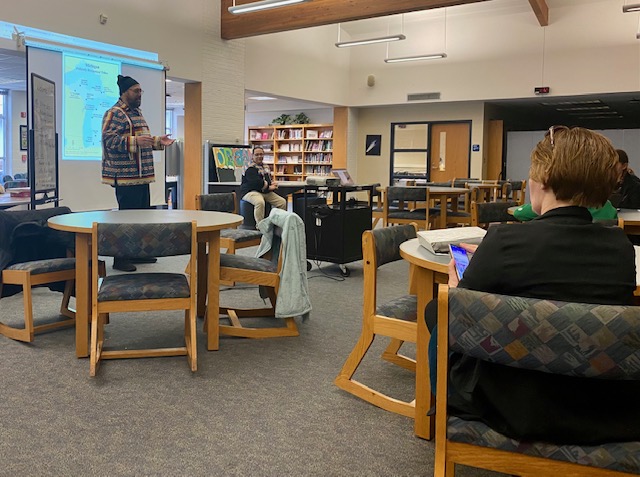
“I actually think that this race is going to be pretty important. I think that Michigan has the potential to be a swing state, and who wins this seat, I think, is going to get national attention,” Mr. David Logel said, a teacher at Grand Ledge High School (GLHS).
During the midterms, many voters determine their vote based on how the current presidency is going. Michigan voters look for what is needed most for our state. This is more crucial, especially during this election process, because there is an opening for Governor, Senate, and the 13 House of Representatives seats.
“I hope that Michigan voters will focus on local issues and not national issues, things that directly impact Michigan, such as infrastructure, both road infrastructure and water infrastructure. I’m hoping they’ll focus on issues with the Great Lakes invasive species. So the things that are coming out of the Department of Energy, Great Lakes, and the environment, also known as Eagle,” Logel said.
While most Michigan voters tend to make their decisions based on how political issues directly impact their daily lives. Economic factors, such as the cost of living, often weigh heavily in their choices on the ballot. This means Michigan voters will lean towards candidates who address local concerns, gaining their support.
“I think that one of the big issues that Michigan voters are going to be looking at the polls this November is how is my pocketbook? How’s my wallet being affected right now? Is my grocery bill higher than it was a year ago? Is my gas bill higher than it was a year ago, etc? I think that’s going to affect how people vote,” Logel said.
Midterm elections tend to have low voter turnout, but this election, especially for Michigan, is drawing significant attention due to the open seats for Governor, Senate, and House of Representatives, causing a competitive fight because of the swing of the state of Michigan.
“There are some other issues that are gonna get people to the polls, and I think because the House and Senate are so close, both of them or neither one of them could potentially be flipped,” Logel said.
While Michigan voters prepare for a significant election year, the outcomes will not only shape the state’s future but could also influence the national political balance. With so many crucial seats up for grabs, this power truly lies in the hands of the Michigan voters. Their decisions will determine the direction of local policies and national representation, making every vote count.
“I think that people, whether they’re pro-war in Iran, or anti-war in Iran, I think whether people are pro-Israel 1st or anti-Israel 1st, I think how people feel about some of the national issues. Whether they’re pro-ice or anti-ice, all of these things are definitely going to affect how voters vote,” Logel said.