When you hear genocide, you often think of the Holocaust and the 1930s. Believe it or not, genocide is still happening around the world today in places like Congo, China, Gaza, Sudan, and more, but it’s not the same as it was in historical periods. Now, the world is facing one of its most critical times, and vulnerable communities such as women, children, babies, and infants are being targeted in heinous ways.
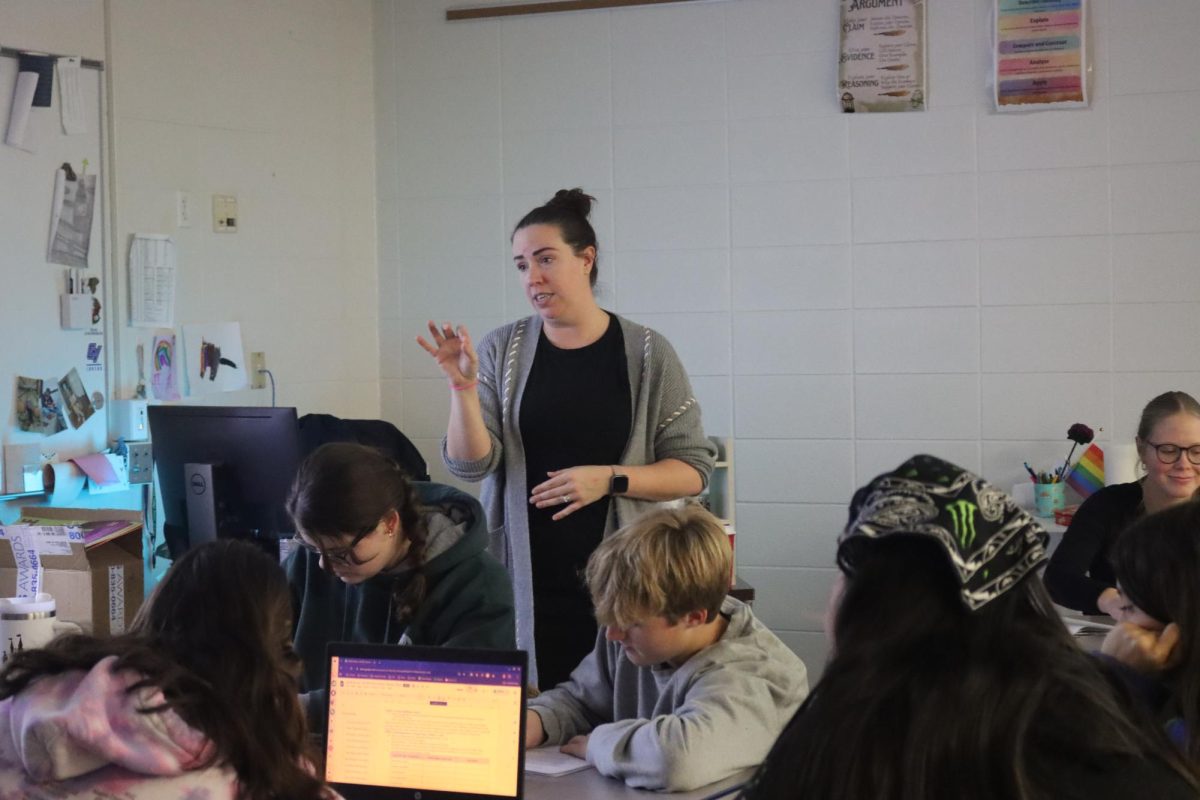
Lauren Read, a World History and Advanced Placement (AP) World teacher at Grand Ledge High School, (GLHS), believes that one of the biggest misconceptions about modern-day genocide is that it doesn’t happen anymore since the rhetoric of the Holocaust, and despite this, many genocides have happened since 1945; the term wasn’t even created until 1950.
“Right now, the average is five to seven years for a genocide to even be considered having happened,” Read said.
Read, with a degree in Genocidal Studies, says that because of this, the current genocides occurring in places such as Sudan, China, Gaza, and Congo are still being investigated by the United Nations, Amnesty International, and the Human Rights Watch. Though these actions and crimes being committed count, it’s challenging to successfully charge a country with genocide as it needs to meet specific parameters, making genocide a challenge in modern-day to define.
Read, like many in the media, sees similarities between past genocides and historical abominations, where discrimination defined civilians’ rights.
“What’s interesting, especially if you look at the history of genocide, using sexual violence is not common,” Read said.
Each time a new genocide comes to light, there is something different than past crimes against humanity that come into play. When it occurs, the crisis often emerges in the event that a country is experiencing internal conflict, such as extreme nationalism. In many countries, recent reports have exposed gender based violence (GBV). The Democratic Republic of Congo, Africa, currently reports the highest death toll associated with GBV, with estimates indicating 2,000-5,000 reported women and girls to have been killed per year, but the numbers continue to rise.
Read finds within her knowledge that sexual violence has very likely come back as used in the past as a tactic to control the population, as it’s not a threat to only the individual, but to the culture as well. When such atrocities were prevalent beforehand, it became easier to revive them as a method of control in the future.
“Because of the astigmatism that comes with being a victim of it, sometimes religion, cultural aspects are manipulated to heighten that shame,” Read addressed.
Though the victim has no control over the situation, perpetrators believe committing acts of violence against specific gender communities will make the victim seen as impure based on cultural beliefs; in some cases, victims of these experiences turn to suicide because, though it wasn’t their fault, they feel they can’t live with the shame of being violated. Read finds that targeting vulnerable people, to the perpetrator, is used to manipulate the community and fuel the offender.
Coming from a place of empathy, Jereldinah McNeily, a senior at GLHS, shares her recent focuses and standpoints as a part of the feminine community, watching as these atrocities continue to unfold.
McNeily notices man-made famines, attacks on aid, and sexual violence and female mutilation, but these are only a few of the arising conflicts we see. Circulating online are images of Google Earth previewing some of these cruelties as they happen, and it is through this that some atrocities are discovered and reported.
“There isn’t enough safe places for people to go to,” McNeily said.
McNeily emphasizes that the U.S could send troops like the Humanitarian Aid to feed and provide medical care to these areas.
“It reminds me of Bugs Life, where the grasshopper says, ‘if you let one ant stand up to us, then they all might stand up,’ so when one person or a small group of people try to do something, they’re immediately shut down,” McNeily said.
This analogy accurately represents what typically happens when an individual attempts to change the state of the world. Others who claim to be “experienced” often try to shut the individual down, preventing others from wanting to listen. Once a leader is fully comfortable and has attracted their designated audience, they feel secure enough to say or act on anything, even if that’s sugarcoating reality.
“I realized at a young age that you can’t believe everything that people tell you and it’s important to do your own research, and again, think for yourself,” McNeily noted.
McNeily believes that citizens should be more involved in politics and that when others claim to be independent, it can contribute to existing divisions. She emphasizes the importance of keeping an open mind when engaging in political conversations, rather than avoiding them, as these issues directly impact everyday life.
“How do you go about your life normally while knowing that people are suffering to that extent- and why aren’t we doing anything,” McNeily said.
McNeily, like many other women, feels hopelessness, as women have progressed significantly from the past, noting that women are still seen as inferior by many communities. Throughout November 2025, there was a global movement protesting GBV and femicide; men, women, and other communities changed their profile pictures on social media platforms to the color purple. This made a pivotal change in the world, resulting in GBV being acknowledged by news outlets and leaders as a crisis.
Fred Hutchinson, a sociology and AP United States History teacher here at GLHS, shares his standpoint on the media and current world atrocities.
Hutchinson suggests that much of the media we rely on for news is an example of yellow journalism, reflecting exaggeration and advertising rather than accuracy, and that this contributes to how others see the world.
Hutchinson uses another example to illustrate how leaders often feel comfortable using derogatory language. Plausible deniability is a term that refers to a leader hinting at a specific outcome without providing specific details, allowing them to later deny to the public that it was ever said.
“By that point, you’ve already kind of won over most of the people who you want to win over anyway, and then you can continue with the genocide,” Hutchinson said.
Hutchinson, throughout his studies, has found that this is how political leaders in the past and present can corrupt a country.
“I think we have a tendency to think that a lot of these things are things that happened in the past, and we just don’t think they’re going to happen again,” Hutchinson said.
Hutchinson believes that staying engaged throughout these conversations, using credible sources, bringing these conversations up throughout time, as well as keeping an open mind, are important to bring voices closer and is crucial to creating a better and safer future environment. He emphasizes that there will be ideas and people that you disagree with, but using your voice to educate.
In these situations, it is always more than what is on the surface; there are hidden complexities that demand closer investigation. Overall, students and faculty heavily advise finding credible sources, performing productive conversations with open minds, using your voice, and building an opinion. Your voice carries volumes, no matter the generation you’re born into.